March 821 classic cars for sale
The March 821 stands out as a rare British Formula One racer from 1982, designed by Adrian Reynard for RAM Racing. With only five examples built, and no world championship points scored, this is a true niche in motorsport history.
Search results
Currently, there are no matching listings for your search.
Create search alert
Let yourself be notified as soon as a listing is published that matches your search filters.
Create listing
Do you have a March 821 that you want to sell? Then create a listing now.
Create listingMarch 821 listing references from Classic Trader
Below you will find listings related to your search that are no longer available on Classic Trader. Use this information to gain insight into availability, value trends, and current pricing for a "March 821" to make a more informed purchasing decision.
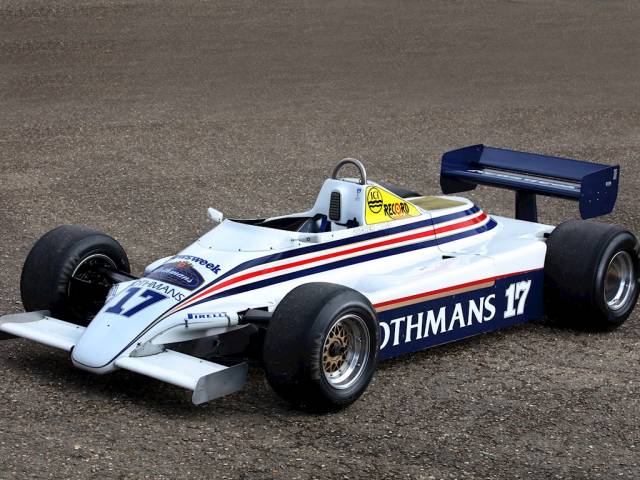
1982 | March 821

Create search alert
Let yourself be notified as soon as a listing is published that matches your search filters.
Create listing
Do you have a March 821 that you want to sell? Then create a listing now.
Create listingMarch 821 Classic Cars: Prices & Market Values
History of the March 821
The March 821 made its appearance in the 1982 Formula One World Championship, entered by RAM Racing under the leadership of John MacDonald. Despite carrying the March badge, the 821 shared no direct lineage with the renowned March Engineering's earlier successes in Formula One. The vehicle was notable for its separation from the original March design, placing it in a unique position in the brand's timeline. After this model, the March name disappeared from Formula One until its return in 1987, with the company's energy shifting primarily to CART IndyCar machinery during the intervening years.
Model History of the 821 Series
The 821 was a one-year effort by RAM, designed by Adrian Reynard and built exclusively for the 1982 World Championship. Its immediate predecessors in the March lineage were earlier F1 chassis—though the 821 was a clear departure, both in development and philosophy. There was no direct successor until the March name resurfaced five years later in Formula One. In total, just five 821 chassis were completed, underlining its scarcity.
Highlights of the March 821
The March 821’s short production—five cars only—and its development by Adrian Reynard set it apart in Formula One’s landscape. Unlike earlier March F1 cars, the 821 operated outside March Engineering’s regular operations, making each example particularly unique in its engineering and provenance. As for market data:
Technical Data
Special Editions and Collectible Models
There are no officially recognised special editions of the March 821, as all five cars manufactured were built for Formula One competition by RAM Racing. Each surviving chassis, however, can be considered distinct due to its extremely limited production and competition history.
Weak Spots and Common Issues
No detailed weak spots are documented for the March 821, likely due to its singular application as a racing car and the rarity of surviving models. Potential buyers should be aware that sourcing original components could pose a significant challenge.
Engine and Performance, Transmission and Handling
The March 821 was developed to Formula One standards of 1982, offering advanced (for its era) single-seater handling, low weight, and aerodynamic focus. Power would have been supplied by then-standard spec F1 engines, typically the Cosworth DFV. Although competitive performance was limited - the car failed to score championship points - it provides a pure experience of early 1980s Grand Prix technology. Given that only the 821 was produced by March in 1982 F1 competition, there are no related variants or popular alternative models from the same year.
Interior, Comfort, Exterior and Design
Designed for pure racing, the March 821 features the spartan, function-first cockpit of a purpose-built Formula One car, prioritising driver control and mechanical accessibility over comfort or style. The exterior reflects Reynard’s early aerodynamic ideas, favouring smooth, slab-sided bodywork, a prominent airbox, and simple graphics as per sponsor requirements of the time. Materials include lightweight alloys and composites, with a use-the-minimum approach typical of that era’s racing machines.
Further Features and Details
Other notable aspects include the car's role in launching Adrian Reynard’s reputation, later a significant figure in international motorsport design. Its complete absence of world championship points also marks it as a study in the challenges of competing at the pinnacle of motorsport with limited resources.
Summary
With only five examples built and a unique development history, the March 821 occupies a rarefied niche in 1980s Formula One. All surviving cars are significant both for their provenance—RAM Racing and Reynard design—and for their distinct departure from earlier March Engineering F1 projects. For collectors, the 821 represents a piece of racing history rooted in a transitional era for the March name.