- Car
- March-Cosworth
- March-Cosworth 742 (0 offers)
March-Cosworth 742 classic cars for sale
The March-Cosworth 742 stands as a defining Formula 2 machine from the mid-1970s, recognised for its advanced engineering and competitive record in international racing. This single-seater encapsulates the spirit of motorsport innovation during a transformative period. Discover the details and history of this exceptional Formula 2 car below.
Search results
Currently, there are no matching listings for your search.
Create search alert
Let yourself be notified as soon as a listing is published that matches your search filters.
Create listing
Do you have a March-Cosworth 742 that you want to sell? Then create a listing now.
Create listingMarch-Cosworth 742 listing references from Classic Trader
Below you will find listings related to your search that are no longer available on Classic Trader. Use this information to gain insight into availability, value trends, and current pricing for a "March-Cosworth 742" to make a more informed purchasing decision.
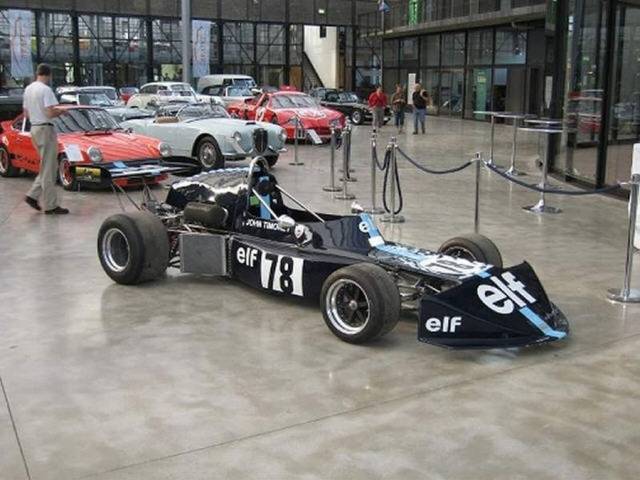
1974 | March-Cosworth Type 742
Formul 2 Oldtimer Rennwagen
Create search alert
Let yourself be notified as soon as a listing is published that matches your search filters.
Create listing
Do you have a March-Cosworth 742 that you want to sell? Then create a listing now.
Create listingMarch-Cosworth 742 Classic Cars: Prices & Market Values
History of the March-Cosworth 742
The March-Cosworth 742 emerged in 1974, engineered by March Engineering in partnership with Cosworth for the fiercely competitive European Formula 2 Championship. March dominated the F2 scene during this era, and the 742 played a pivotal role in their success. The chassis featured a riveted aluminium monocoque, a hallmark of racing construction of the period, designed to achieve optimal lightness and rigidity. The 742’s introduction was a direct response to the demand for technically refined, customer-available Formula 2 vehicles. Drivers such as Jean-Pierre Jarier and Patrick Depailler piloted the 742 to strong results, underlining the model's significance in the European racing landscape.
Model history
The March 742 succeeded the respected March 732, incorporating significant aerodynamic and suspension updates for greater competitiveness. With its arrival, the 742 acknowledged the evolving nature of Formula 2 specifications, particularly adopting ground effect concepts and improved weight distribution. After the 742, the March 752 picked up the baton, further evolving the monocoque construction and incorporating additional advances in aerodynamics and mechanical grip. As a result, the 742 stands as a crucial link in the continuous development of March’s Formula 2 line-up, bridging the early ‘70s designs with the more sophisticated offerings of the later decade.
Highlights and Special Features of the March-Cosworth 742
The 742 is marked out by its comprehensive set of adjustable suspension mounts, providing teams with broad scope for fine-tuning handling characteristics. Its low weight and robust Cosworth BDA four-cylinder engine—usually producing around 300 bhp—offered a competitive edge. The model benefitted from active development during its racing life, so finding cars today with various updated components is common. For those interested in motorsport authenticity, the 742’s period-correct Hewland gearbox, robust disc brakes on all corners, and adaptable aero package set it apart from more generic single-seaters.
Technical data
Special Editions and Collectible Models
Most 742s were constructed to direct customer specifications, so special, factory-finished editions are rare. Some examples distinguished themselves with unique livery sponsored by period race teams or were fitted with period upgrades such as alternate fuel injection setups or experimental aero components. Chassis with proven race history, especially those campaigned by leading teams or well-known drivers, are particularly notable within the 742 lineage.
Weak Spots and Common Issues
Due to its status as a competition vehicle, the March-Cosworth 742 requires regular and thorough mechanical care. Attention should be paid to the integrity of the monocoque, especially in areas prone to stress or historic accident damage. Rebuilding the Cosworth BDA engine is both costly and essential for reliable performance. The Hewland gearbox requires regular inspection and periodic rebuilds. Suspension joints, particularly rose joints and wishbone mounts, should be checked for play and fatigue. Spare parts for both the chassis and power unit can be a challenge to source but are typically available through racing specialists.
Engine and Performance, Transmission and Handling
The March-Cosworth 742 delivers a responsive, high-revving experience courtesy of the Cosworth BDA engine. With an output near 300 PS and a low kerb weight, acceleration is strong, and the car’s handling sharpens with precise steering feedback. The Hewland five-speed gearbox is purpose-built for fast, sequential shifts under intense racing conditions. The 742’s balance and set-up flexibility makes it a popular choice in historic racing events, with a chassis tuned for slicks or treaded tyres and adaptable to a variety of circuit types. Among March's Formula 2 catalogue, the 742 remains well regarded for its performance in the 1974 season, but the later 752 and earlier 732 also attract attention due to their significance within March's racing history.
Interior, Comfort, Exterior and Design
As a purebred racing machine, the March 742 prioritises function over comfort. The cockpit is a minimal, single-seat layout with a dished steering wheel, basic instrumentation focused solely on critical information, and a fixed racing bucket seat. Externally, the 742 displays the textbook silhouette of a 1970s Formula 2 car: low nose, wide track, exposed suspension arms, and period-correct sponsor livery. Aerodynamic aids such as adjustable front and rear wings, as well as underbody smoothing, are typical. Buyers may encounter cars featuring bespoke period accessories like additional gauges or non-standard seat padding, reflecting the individual build histories of each chassis.
Other relevant features
Vehicles like the March-Cosworth 742 typically include period FIA papers for historic racing eligibility, increasing their desirability for participation in events such as the FIA Masters Historic Formula 2 series. Owners benefit from a broad international community of historic racing clubs, which support ongoing maintenance and competition.
Summary
The March-Cosworth 742 represents a peak in Formula 2 engineering from the 1970s, offering both historical value and driving exhilaration for today’s classic racing enthusiasts. Its blend of mechanical sophistication, competition pedigree, and specialist support assures continued interest among serious motorsport collectors and drivers.