- Automobil
- Lanchester
- Lanchester 30 HP (0 Angebote)
Lanchester 30 HP – Classic Car for Sale
The Lanchester 30 HP stands as one of the rarest achievements in British automotive engineering, with just 120 units produced and only 9 still known today. Its advanced technical innovations and rich Lanchester family heritage make this model a highlight for discriminating collectors.
Suchergebnisse
Zur Zeit sind keine passenden Inserate zu Ihrer Suche veröffentlicht.
Create search alert
Let yourself be notified as soon as a listing is published that matches your search filters.
Create listing
Do you have a Lanchester 30 HP that you want to sell? Then create a listing now.
Create listingLanchester 30 HP listing references from Classic Trader
Below you will find listings related to your search that are no longer available on Classic Trader. Use this information to gain insight into availability, value trends, and current pricing for a "Lanchester 30 HP" to make a more informed purchasing decision.
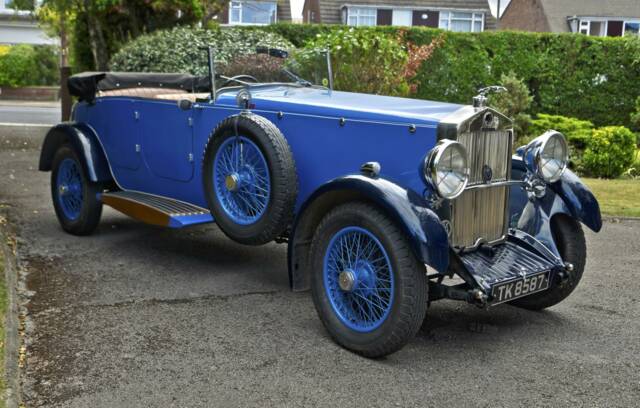
1931 | Lanchester 30 HP
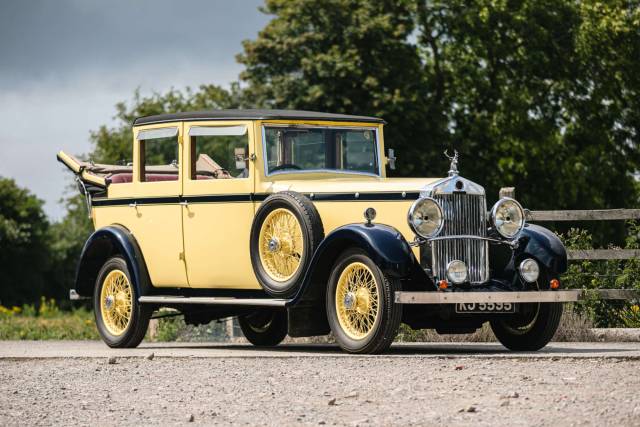
1929 | Lanchester 30 HP
1929 Lanchester 30hp Straight Eight Landaulette
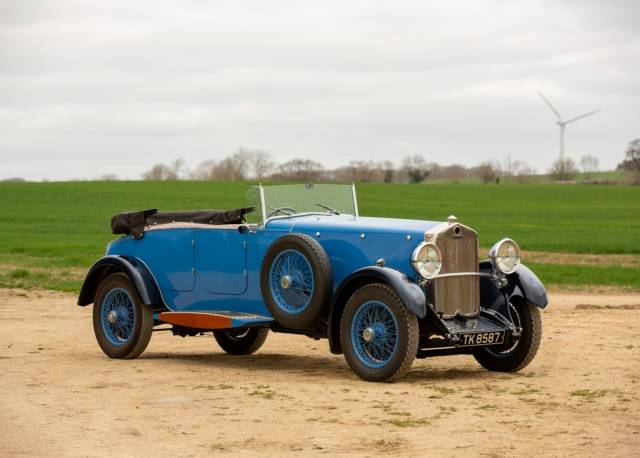
1932 | Lanchester 30 HP
Lanchester 30hp Straight Eight
Create search alert
Let yourself be notified as soon as a listing is published that matches your search filters.
Create listing
Do you have a Lanchester 30 HP that you want to sell? Then create a listing now.
Create listingLanchester 30 HP Classic Cars: Prices & Market Values
Introduction and History of Lanchester 30 HP
The Lanchester Motor Company, founded in 1895, holds the distinction of being the first wholly British car manufacturer. The 30 HP, also known as the 'Straight Eight', was a direct creation by George Lanchester, building on his well-regarded 23hp six-cylinder design. Unveiled in a time of intense innovation, it arrived as one of the most technically ambitious pre-war British vehicles – a reflection of the Lanchester family's relentless pursuit of engineering excellence. Only 120 examples were hand-built, with period bodywork meticulously crafted to factory blueprints. The model featured prominently within the Lanchester family itself, being the vehicle of choice for George and Frank Lanchester’s daughters, and has been well documented in historical publications dedicated to the marque. The disruptions of the Great Depression led to Daimler acquiring Lanchester, with the brand later joining what is now Jaguar.
Model History
The 30 HP was Lanchester’s answer to the growing demand for refinement, luxury, and technical progress in upper-class motoring during the late 1920s. As an evolution of the 23hp, the 30 HP adopted a straight-eight configuration, advancing both smoothness and performance. Its low production figures were the result of bespoke craftsmanship and an economic climate unfavourable to such exclusivity. Over time, most 30 HPs were preserved by enthusiast owners, and the tiny survivor population means every vehicle has a traceable, dedicated provenance. No true direct successor to the 30 HP was produced, as the Lanchester brand gradually came under Daimler's control.
Highlights of the Lanchester 30 HP
A defining feature of the Lanchester 30 HP is its innovative engineering: an 8-cylinder 4.4-litre engine with an overhead worm-driven camshaft and a distinctive Lanchester worm-drive rear axle. Standard fitments included Dewandre servo-assisted 15-inch drum brakes, a four-speed manual gearbox, and a dashboard equipped with a Tapley gradient indicator plus an 'Auster Screen' for rear passengers. Individuality was also expressed through bodywork, with each car bodied according to original factory drawings. This rare model remains a highlight at modern rallies, consistently earning accolades. Family association adds a cultural layer, as multiple Lanchester family members drove and championed the 30 HP.
Technical Data
Special Editions and Collectible Models
Although not marketed as a special edition, every Lanchester 30 HP is, by virtue of its production method, a bespoke vehicle. With each body shaped to factory blueprints yet tailored to client specification, no two cars are identical. Some surviving examples are particularly renowned due to their connection with notable Lanchester family members or recurring appearances at prestige classic events.
Weak Spots and Common Issues
Potential buyers must pay attention to the unusually large turning circle of roughly 50 feet, which can make manoeuvring in tight urban areas challenging. Many examples have seen upgrades such as additional indicators to comply with current transportation laws and, commonly, a retrofit of the SU updraught carburettor for improved reliability and performance. As is typical with low-production, hand-built classics, many cars have had few owners, enabling comprehensive provenance checks.
Engine and Performance, Transmission and Handling
The straight-eight engine is noteworthy for its smoothness, power delivery, and refined operation thanks to twin ignition (coil and magneto) and advanced valve gear. Despite significant weight and dimensions, the car’s four-speed transmission and servo brakes offer secure control at the limits of pre-war technology. The sweeping turning radius imposes some limitations on parking and low-speed navigation, but the mechanical layout ensures a supple ride at speed.
Popular Lanchester 30 HPs
- Most surviving 30 HPs enjoy substantial participation in vintage rallies and club events, such as the Lanchester Register Rally, where their robust engineering—not sheer speed—wins the judges’ favour. Twin ignition and 4.4-litre displacement accentuate their reliability on longer excursions. undefined
Interior, Comfort, Exterior and Design
True to 1920s upper-class British taste, every Lanchester 30 HP displays individual coachwork based on factory originals, often executed by specialist coachbuilders using the best materials available. The interior equipment was advanced for its time, with elaborate dashboards outfitted with all period-relevant gauges, including the Tapley gradient indicator, and rear passenger 'Auster Screen' windshields for added comfort. Special orders sometimes extended to custom upholstery and colour schemes. Accessories like extra turn signal lights are frequently found on extant cars, reflecting practical adaptation to today’s requirements as well as a tradition of thoughtful technical upgrades.
Other Notable Features
The twin ignition system stands out among engineering solutions of its era, enhancing dependability for a car built primarily in an age before motorways. Most surviving examples hold histories of minimal former owners, often remaining in enthusiast hands for generations. The unusually comprehensive original factory documentation allows restorers to maintain authenticity today.
Summary
The Lanchester 30 HP occupies a unique position as a focal point of early British luxury motoring, engineering ambition and family legacy at its heart. With just 9 known survivors from 120 built, each car is both a significant historical document and a testament to Lanchester’s drive for precision and quality. Its lasting relevance is evidenced by its dominance among classic Lanchester listings and the continued presence at leading classic rallies.