Humber Sceptre Classic Cars for Sale
The Humber Sceptre stands out in British automotive history as a luxury-class saloon, merging refined engineering, distinctive styling and an impressively equipped interior. Renowned for its advanced features and smooth performance, the Sceptre offers a compelling blend of tradition and innovation for classic car enthusiasts.
Search results
Currently, there are no matching listings for your search.
Create search alert
Let yourself be notified as soon as a listing is published that matches your search filters.
Create listing
Do you have a Humber Sceptre that you want to sell? Then create a listing now.
Create listingHumber Sceptre listing references from Classic Trader
Below you will find listings related to your search that are no longer available on Classic Trader. Use this information to gain insight into availability, value trends, and current pricing for a "Humber Sceptre" to make a more informed purchasing decision.
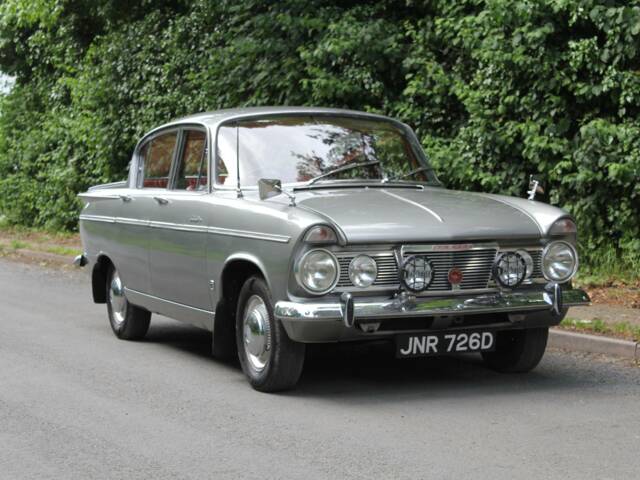
1966 | Humber Sceptre SI/SII
1966 Humber Sceptre MKII - 44000 miles
Create search alert
Let yourself be notified as soon as a listing is published that matches your search filters.
Create listing
Do you have a Humber Sceptre that you want to sell? Then create a listing now.
Create listingHumber Sceptre Classic Cars: Prices & Market Values
History of the Humber Sceptre
The Humber Sceptre was produced in the UK between 1963 and 1976 and represented the pinnacle of Humber’s craft in the postwar era. Launched as a high-quality saloon positioned at the top of Humber's range, the Sceptre’s combination of robust mechanics and luxury appointments helped it carve out a reputation as a premium, reliable model. Its production spanned key years in the evolution of British motoring, and Sceptre models were regularly lauded for refinement that outclassed many competitors in comfort and engineering.
Model History
The Sceptre originated as an upmarket development within Humber’s lineup and evolved significantly through its run. The MKII, in particular, became known as the most luxuriously equipped in its segment, marked by upgraded engineering such as a 1725cc OHV engine with a new five-bearing crankshaft and a four-speed gearbox featuring overdrive. No specific predecessor directly filled the same premium niche, and upon its discontinuation in 1976, the demise of the Sceptre marked the end of an era for Humber, with no true successor carrying its prestige focus forward.
Highlights of the Humber Sceptre
Key distinguishing features include a smooth 1725cc overhead-valve motor, durable five-bearing crankshaft, light and direct steering, a high-quality suspension setup and superior build quality. The Sceptre’s interior was particularly praised: plush original seats, charming fittings, and a meticulous finish defined the cabin. It also featured a four-speed manual transmission with overdrive, enabling a surprisingly dynamic drive for a model best known for comfort. Metallic grey was a hallmark factory colour, adding to the vehicle's sophisticated presence on the road. Vehicles are often found with original handbooks and MKII sales brochures, underscoring the model’s well-documented history.
Technical Data
Special Editions and Collectible Models
Among Sceptres, the MKII is particularly cherished due to its upgraded mechanicals, luxury focus and comprehensive equipment. While the standard range was already high-specification, particular vehicles featuring rare factory options or preserved dealer brochures can be seen as especially desirable. No officially designated limited editions are widely documented.
Engine and Performance, Transmission and Handling
With its 1725cc engine and five-bearing crankshaft, the Sceptre II delivers smooth, surprisingly responsive acceleration for a saloon of its class. Light steering, a robust four-speed gearbox with overdrive, and quality chassis tuning result in a comfortable yet lively driving experience. The advanced suspension lent the Sceptre a stability that matched its luxury status, while careful sound dampening ensured a quiet ride. The MKII leads interest due to its technical and comfort-oriented upgrades. Its blend of power, reliability and refinement distinguish it even among British luxury saloons of the 1960s and 70s.
Interior, Comfort, Exterior and Design
The Sceptre’s exterior reflects understated British elegance, highlighted by its metallic grey bodywork. Inside, owners find original, high-quality upholstery, authentic seat designs and detailed trims. Humber focused on both comfort and intelligent arrangement, with upmarket materials and functional elegance dominating the interior. Controls are well-positioned, and the expansive dash, characteristic for its time, was both prestigious and practical. Factory accessories and high-grade fittings emphasise the prestige positioning of this model.
Summary
The Humber Sceptre sits at the top of its class for British luxury saloons of its era, especially in the MKII version, which brought significant advancements in comfort, performance and mechanical reliability. With its unique position in the classic car market as the definitive Humber, it draws consistent attention among enthusiasts seeking an authentically British, meticulously engineered and well-appointed classic vehicle.