Hudson Wasp Classic Cars for Sale
The Hudson Wasp, produced from 1952 to 1956, is a classic American vehicle that reflects the engineering mindset of the Hudson Motor Car Company and the era's transition from pre-war to post-war automobile design philosophies. This model stands out for its distinct blend of design, performance, and its unique place in both Hudson and AMC history.
Search results
Currently, there are no matching listings for your search.
Create search alert
Let yourself be notified as soon as a listing is published that matches your search filters.
Create listing
Do you have a Hudson Wasp that you want to sell? Then create a listing now.
Create listingHudson Wasp listing references from Classic Trader
Below you will find listings related to your search that are no longer available on Classic Trader. Use this information to gain insight into availability, value trends, and current pricing for a "Hudson Wasp" to make a more informed purchasing decision.
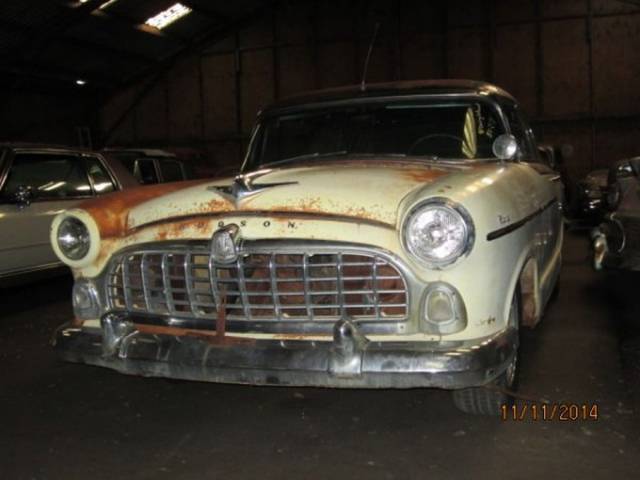
1954 | Hudson Wasp
Hudson - wasp hollywood hardtop coupe 1955
Create search alert
Let yourself be notified as soon as a listing is published that matches your search filters.
Create listing
Do you have a Hudson Wasp that you want to sell? Then create a listing now.
Create listingHudson Wasp Classic Cars: Prices & Market Values
History of the Hudson Wasp
Manufactured between 1952 and 1956, the Hudson Wasp was introduced during a pivotal time in automotive history. Initially built by the Hudson Motor Car Company in Detroit, it later became part of American Motors Corporation’s (AMC) line-up after the 1954 merger with Nash Motors. AMC continued production in Kenosha, Wisconsin, under the Hudson marque for the final two years. The Wasp’s origins reflect Hudson’s efforts to push innovation in the early 1950s, a period renowned for American car makers vying to capture the public’s interest with stylish bodywork and improved engineering.
Model History
The Hudson Wasp succeeded the Hudson Pacemaker, aiming to supplement Hudson’s range with a mid-size model that balanced affordability, comfort, and quality engineering. It ran parallel to the better-known Hudson Hornet but occupied a unique position thanks to its more accessible price point and slightly more modest specification. After the Nash-Hudson merger, the Wasp underwent significant changes to its platform and styling, marking the transition from Detroit to Kenosha production. The model was ultimately discontinued after 1956, as AMC streamlined its range.
Highlights of the Hudson Wasp
What distinguishes the Hudson Wasp is its combination of a unibody construction and the well-regarded 'step-down' chassis design, delivering improved handling and passenger safety relative to many contemporaries. The Wasp’s historical narrative is closely tied to the shifting fortunes of the American independent automakers.
According to recent supply statistics, the Hudson Wasp accounts for 100% of all Hudson listings on our marketplace, underscoring its prominence among surviving Hudson cars. Additionally, demand statistics reveal that every view of a listed Hudson vehicle is directed toward the Wasp model, highlighting an exclusive level of interest within the classic Hudson community.
Technical Data
Special Editions and Collectible Models
While there are no widely celebrated factory-limited editions of the Wasp, individual cars equipped with period accessories or uncommon options—such as dealer-installed overdrive transmissions or custom trim packages—can draw additional interest. The post-merger 1955-1956 models are notable for their AMC-derived bodies and unique styling cues distinct from earlier Detroit-built versions.
Engine and Performance, Transmission and Handling
The first-generation Wasp came standard with the well-regarded Hudson straight-six, offering reliable, torquey performance ideal for mid-century American roads. Thanks to the 'step-down' chassis, the Wasp offered a lower centre of gravity than most period competitors, greatly benefitting road manners, especially on winding routes. The post-merger models, built by AMC, experienced changes in mechanical setup and some loss of performance edge due to parts bin rationalisation, yet retained durable mechanical foundations. Key variants include the early 1952-1954 Hudson-engineered Wasp, prized for its authentic step-down chassis and 6-cylinder powerplant, and the 1955-1956 AMC-built versions distinguished by styling and drivetrain updates.
Interior, Comfort, Exterior and Design
The Hudson Wasp’s body was characterised by clean lines, functional chrome accents, and the signature Hudson grille design of the early 1950s. Interiors were spacious for their class, featuring well-padded bench seats and practical instrument layouts. Material quality reflected Hudson’s upper-mid-market ambitions, with a focus on longevity and understated style. Notable design elements included wraparound windshields introduced on later models and distinctive two-tone paint options. Period-appropriate accessories such as fender skirts, bumper guards, and custom wheel trim were popular choices for owners looking to personalise their cars.
Summary
The Hudson Wasp is an unfiltered reflection of American motoring’s transition through the 1950s, as the automotive market consolidated and styling trends evolved. The Wasp holds a unique position, not just in Hudson’s story, but also within the American Motors Corporation era, combining robust engineering with practical design. Its 100% representation in the Hudson supply and demand for classics underlines its significance among Hudson survivors and positions it as a primary point of reference for enthusiasts seeking an authentic post-war American driving experience.