- Car
- Hispano-Suiza
- Hispano-Suiza H6 (0 offers)
Hispano-Suiza H6 classic cars for sale
The Hispano-Suiza H6 embodies the pinnacle of pre-war automotive engineering, combining luxury, power, and technical prowess from the golden era of motoring. With limited numbers produced between 1919 and 1933, every H6 is a testament to the craftsmanship and prestige of early 20th-century automobiles.
Search results
Currently, there are no matching listings for your search.
Create search alert
Let yourself be notified as soon as a listing is published that matches your search filters.
Create listing
Do you have a Hispano-Suiza H6 that you want to sell? Then create a listing now.
Create listingHispano-Suiza H6 listing references from Classic Trader
Below you will find listings related to your search that are no longer available on Classic Trader. Use this information to gain insight into availability, value trends, and current pricing for a "Hispano-Suiza H6" to make a more informed purchasing decision.
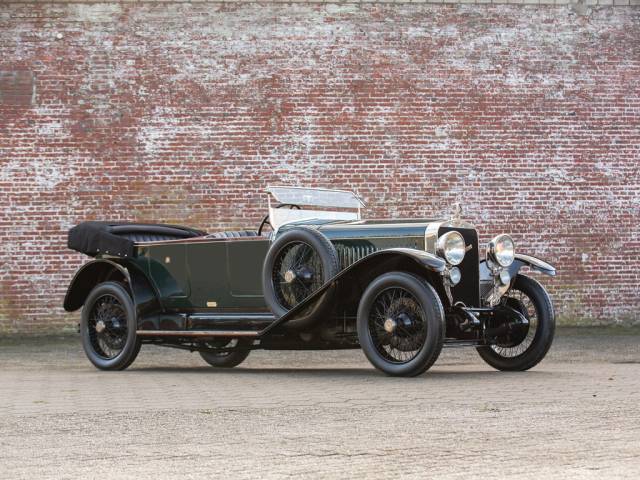
1919 | Hispano-Suiza H6
1919 Hispano-Suiza H6 Torpédo by Duvivier
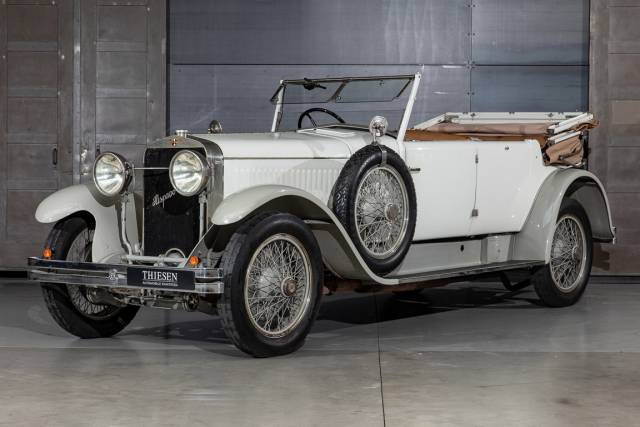
1921 | Hispano-Suiza H6
H6 Transformationscabriolet
Create search alert
Let yourself be notified as soon as a listing is published that matches your search filters.
Create listing
Do you have a Hispano-Suiza H6 that you want to sell? Then create a listing now.
Create listingHispano-Suiza H6 Classic Cars: Prices & Market Values
History of the Hispano-Suiza H6
Launched at the 1919 Paris Motor Show, the Hispano-Suiza H6 stands out as one of the most significant luxury cars of its time. Produced mainly in France, the H6 was conceived in the post-WWI environment, blending cutting-edge engineering with lavish appointments for the privileged few. Its production ran until 1933, cementing the marque’s reputation for manufacturing technologically advanced and elegant vehicles tailored to the elite. Approximately 2,350 units of the H6, H6B, and H6C variants left the factory, each showcasing the relentless pursuit of quality and performance that defined Hispano-Suiza during the interwar years.
Model History of the Hispano-Suiza H6 Series
The H6 had no direct predecessor but marked a significant leap from the company’s earlier aircraft-influenced designs. Across its production span, the H6 evolved into the H6B and H6C models, introducing refinements in engine output, chassis engineering, and luxury features. The series’ consistent dedication to advancements ensured the H6 remained at the forefront of luxury motoring until production ceased in 1933. After the H6, Hispano-Suiza continued to explore innovation but never recaptured the particular blend of grandeur and performance that defined the H6 era.
Highlights and Statistics of the H6 Series
Each Hispano-Suiza H6 was a blend of avant-garde technology and bespoke craft. Defining features include its in-line six-cylinder engine—an innovation resonant of Hispano-Suiza’s aviation heritage—meticulously engineered suspension setups, and commitment to driver comfort. Owners could expect a unique driving machine offering superior smoothness and reliability for the era.
Technical Data
Special Editions and Collectible Models
The H6 series comprises three notable versions: the original H6, the improved H6B with increased engine capacity and enhanced luxury, and the sporting H6C variant, favoured for its higher performance and selected by coachbuilders for exclusive, tailored bodies. Each variant’s rarity, combined with bespoke configurations by leading coachbuilders, adds substantial historical and collector value.
Weak Spots and Common Issues
No specific weaknesses are documented in the provided data. As with any vehicle from this era, maintenance of the complex braking system and regular inspection of the engine and chassis are essential. Parts availability can be a challenge due to the limited production numbers, and professional restoration expertise is vital to preserve authenticity.
Engine, Performance, Transmission and Handling
The H6’s inline-six engine, conceived with aviation-inspired engineering, was renowned for delivering robust performance and unprecedented smoothness for its age. The inclusion of advanced four-wheel servo brakes was highly unusual for the time, providing exceptional stopping power. The H6C, particularly, was prized for its tuned chassis and enhanced power output, appealing to drivers pleased with a more sporting edge. The car’s long wheelbase and innovative suspension resulted in a sophisticated ride by 1920s standards. • H6B – Recognised for its increased power output and greater comfort. • H6C – The sport-oriented evolution, highly sought after for competitive and coachbuilt examples.
Interior, Comfort, Exterior and Design
The H6 exemplified bespoke luxury, with bodies constructed by preeminent coachbuilders according to buyer specification. Interiors often featured the finest materials available: polished wood, hand-finished leather, and intricate instrumentation. Externally, the H6 was distinguished by bold, aerodynamic lines and the winged stork mascot, referencing Hispano-Suiza’s aviation achievements. Exclusive paintwork, custom luggage, and one-off accessories were frequently commissioned, making each H6 unique.
Other Relevant Features
Hispano-Suiza’s commitment to innovation imbued the H6 with numerous technical firsts, such as the pioneering use of aluminium in both the engine and bodywork in select examples. Its close association with notable European coachbuilders resulted in a diverse array of body styles, from luxurious limousines to streamlined sporting models.
Summary of the Hispano-Suiza H6
The Hispano-Suiza H6 embodies the intersection of engineering prowess and luxury craftsmanship during the interwar period. Its in-line six engine, advanced braking technology, and tailored design elements distinguish it from contemporaries. Limited availability and total dominance of the Hispano-Suiza name in both supply and demand data underscore its singular allure. For aficionados seeking a historically significant classic with genuine automotive pedigree, the H6 stands unrivalled.