Glasspar G2 classic cars for sale
The Glasspar G2 stands as an early pioneer in American automotive history, being the first production sports car body made entirely from fibreglass. Born from the vision of Bill Tritt in 1949, it could be purchased as a complete car or as a body/chassis kit, giving enthusiasts flexibility and hands-on engagement with their future sports car.
Search results
Currently, there are no matching listings for your search.
Create search alert
Let yourself be notified as soon as a listing is published that matches your search filters.
Create listing
Do you have a Glasspar G2 that you want to sell? Then create a listing now.
Create listingGlasspar G2 listing references from Classic Trader
Below you will find listings related to your search that are no longer available on Classic Trader. Use this information to gain insight into availability, value trends, and current pricing for a "Glasspar G2" to make a more informed purchasing decision.
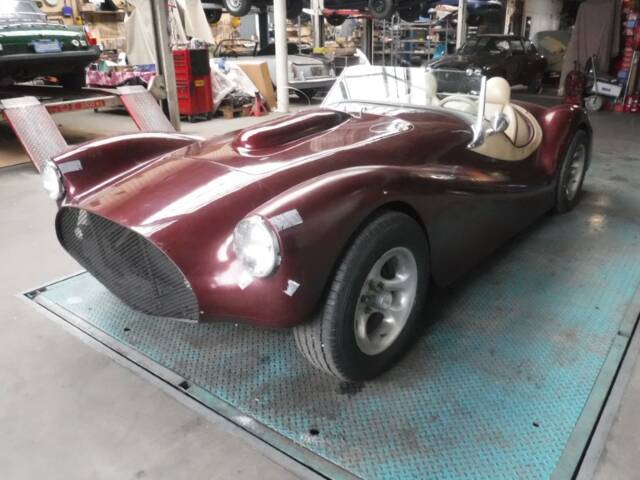
1953 | Glasspar G2
Glasspar-G2
Create search alert
Let yourself be notified as soon as a listing is published that matches your search filters.
Create listing
Do you have a Glasspar G2 that you want to sell? Then create a listing now.
Create listingGlasspar G2 Classic Cars: Prices & Market Values
Introduction and history of the Glasspar G2
The Glasspar G2 revolutionised the world of small-series sports cars in America. Bill Tritt, inspired by both racing and innovation, debuted the G2 in 1949. What set this car apart was its construction: it was the first production sports car to utilise an all-fibreglass body, long before the material became commonplace in automotive manufacturing. Most G2s were sold as kit-based cars, targeting hobbyists and sports car lovers alike, while a small number left the Glasspar workshops as complete vehicles. The flexible approach enabled a wide variety of drivetrains and running gear to be installed, depending on owner preference. The pioneering use of fibreglass by Glasspar influenced the design and production methods of later American manufacturers, notably paving the way for the Chevrolet Corvette.
Model history
The G2 did not directly replace any previous Glasspar model, as it represented the company’s maiden voyage into car manufacturing after prior experience with marine fibreglass. Its immediate successors in the wider market were other fibreglass-bodied cars, including later American sports models. The G2 series itself remained unique, as it did not give birth to a traditional succession of models but sparked a wave of kit car enthusiasm across the United States.
Highlights of the Glasspar G2
The Glasspar G2’s defining feature is its all-fibreglass body, a true innovation in its era. Not only was it extremely lightweight, but the material’s malleability allowed for distinctive, hand-crafted curves. Buyers had flexibility to configure the car to their tastes, making each G2 potentially unique. The vehicle’s historical importance is cemented by its pioneering role in American kit car and fibreglass construction.
Technical data
Special Editions and Collectible Models
A few G2s were delivered as complete, factory-assembled cars, as opposed to the more common body or kit form. These factory-built examples can be considered rarer and are typically more sought after due to their provenance and greater likelihood of originality.
Weak Spots and Common Issues
Fibreglass bodies are less prone to corrosion than steel, but improper repairs or age-related delamination can lead to structural concerns. Kit-based nature means component quality and finish can vary greatly; mechanical systems depend heavily on what the original builder fitted. Always inspect for subframe integrity and professional workmanship on suspension and drivetrain installations.
Engine and Performance, Transmission and Handling
Glasspar G2 performance is highly dependent on the build. Most were fitted with powerful V8s, offering impressive acceleration due to the lightweight fibreglass body. Handling is influenced by the suspension and chassis components sourced by the builder. Some cars handle sharply, while others—depending on donor parts—may feel more utilitarian. The variety in engine and powertrain options gives each G2 a unique driving experience. The most interesting G2s are those fitted with period-correct Ford or Chrysler V8s, mated to manual transmissions, and using a custom or adapted chassis for improved rigidity.
Interior, Comfort, Exterior and design
The G2’s exterior is defined by its flowing, minimalist lines—achievable only through fibreglass. Interiors were likewise bespoke, with instrumentation, seating, and finishing details varying according to the wishes of the original purchaser. Choices of paintwork and trim are highly individualised. Early kits sometimes came without a windscreen or weather protection, underlining its purist sports character. Accessories and equipment often depended on the donor car or what could be sourced at the time—true to the era’s kit car spirit.
Other features
Glasspar’s marine background was reflected in the durable, lightweight construction techniques transferred from boatbuilding to car making. The company’s experimental approach has defined much of its historic significance.
Summary
The Glasspar G2 represents an essential milestone in American sports car history, introducing mass-produced fibreglass bodies to the automotive world. Its rarity, pioneering engineering and the flexibility of the kit car format combine to make every G2 unique. Whether delivered as a factory-built car or assembled at home, originality and build quality are key points for buyers and enthusiasts to consider.