Derby Cyclecar classic cars for sale
The Derby Cyclecar stands as a rare representative of early 20th-century motoring ingenuity, offering enthusiasts a glimpse into the world of lightweight French cyclecars. Lightweight engineering, minimalistic design and a focus on simplicity define the Derby Cyclecar—an intriguing addition to any classic car collection.
Search results
Currently, there are no matching listings for your search.
Create search alert
Let yourself be notified as soon as a listing is published that matches your search filters.
Create listing
Do you have a Derby Cyclecar that you want to sell? Then create a listing now.
Create listingDerby Cyclecar listing references from Classic Trader
Below you will find listings related to your search that are no longer available on Classic Trader. Use this information to gain insight into availability, value trends, and current pricing for a "Derby Cyclecar" to make a more informed purchasing decision.
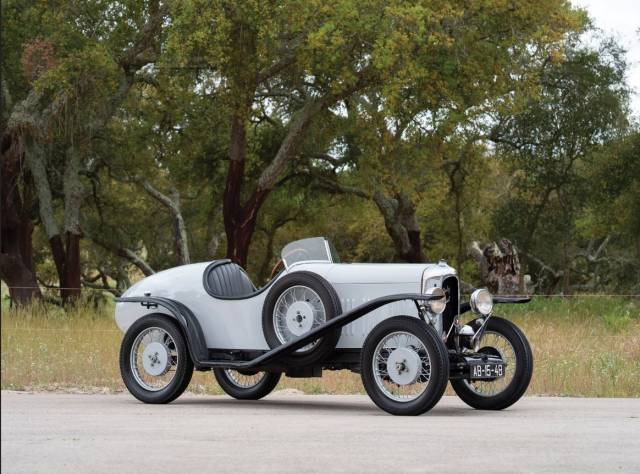
1926 | Derby Cyclecar
Create search alert
Let yourself be notified as soon as a listing is published that matches your search filters.
Create listing
Do you have a Derby Cyclecar that you want to sell? Then create a listing now.
Create listingDerby Cyclecar Classic Cars: Prices & Market Values
History of the Derby Cyclecar
The Derby Cyclecar emerged in France during the 1910s and 1920s, a period marked by a surge in cyclecar popularity due to their affordability and tax advantages. Derby, established in Courbevoie, specialised in compact, lightweight vehicles aimed at providing cost-effective mobility without compromising on the spirit of driving engagement. The Cyclecar model, like its contemporaries, was built to navigate narrow city streets and rural tracks with ease, making it a practical solution for early motorists after World War I.
Model History
Derby's approach to the cyclecar concept involved utilising small-displacement engines—frequently single- or twin-cylinder units—paired with lightweight chassis construction. The cheapest means of owning a car at the time, these models often featured chain or belt drives rather than more complex and expensive shaft systems. With the rise of larger and more sophisticated automobiles in the late 1920s, production of cyclecars dwindled, and Derby pivoted to more conventional vehicles before ceasing operations entirely.
Highlights of the Derby Cyclecar
The standout quality of the Derby Cyclecar is its ultralight construction, using slender frames and minimal bodywork to cut weight and boost efficiency. The driving layout was basic: often open-bodied, sometimes with tandem seating, and always on narrow track widths. The true charm lies in the car’s mechanical purity—a direct connection between driver, machine, and road.
As per Classic Trader listings, Derby Cyclecars comprise a niche presence among classic cars for sale, further amplifying their uniqueness and collector value.
Technical Data
Special Editions and Collectible Models
There are no widely recognised special editions within the Derby Cyclecar catalogue. However, surviving examples with original patina, period-correct mechanicals, or verified racing provenance are likely to command additional attention among enthusiasts. Unique bodywork or custom coachbuilt examples occasionally appear, typically commissioned for competition or private owners in period.
Weak Spots and Common Issues
Potential weak spots mostly relate to drivetrain components—chain or belt drives require careful adjustment and are prone to wear. The lightweight framing can suffer from rust or wood rot, especially if ash was used. Brake effectiveness is often limited, and spare parts availability can be challenging due to the car’s rarity. As with many early vehicles, careful mechanical inspection is needed before road use.
Engine, Performance, Transmission and Handling
The Derby Cyclecar’s hallmark is its lightweight agility rather than outright speed. Modest engine outputs meant acceleration was relaxed, but minimal mass allowed for playful handling at low to moderate speeds. Simplicity in engineering invites hands-on mechanical engagement, while the narrow track and basic suspension demand attention from the driver. The transmission, typically a basic two- or three-speed manual, was often direct and involved. Overall, the Derby Cyclecar delivers a period-correct motoring experience focused on sensation over numbers. Most popular variants are those equipped with V-twin engines from period motorcycle suppliers, offering a distinct soundtrack and more sprightly performance compared to single-cylinder siblings.
Interior, Comfort, Exterior and Design
Design-wise, the Derby Cyclecar exemplifies 1920s cyclecar ethos: open cockpits with minimal or no weather protection, wire wheels, bench or tandem seating, and a focus on function over flair. Painted or polished bodywork often reveals artisanal construction, while dashboards are sparse, typically featuring only essential gauges. Some bespoke examples sported unique coachwork or colour schemes. Special equipment, like period lamps and leather straps, were common accessories reflective of the era.
Other Noteworthy Features
Given their age, Derby Cyclecars sometimes appear with unique modifications made by owners to enhance comfort or reliability. Some also feature historical competition plaques or other documentation increasing historical interest. Any surviving original documentation or provenance adds significant value for collectors.
Summary
In summary, the Derby Cyclecar offers a vivid snapshot of post-WWI automotive history—a period when engineering creativity triumphed over material scarcity. Rare in today’s market, their simplicity, period-correct driving feel, and mechanical honesty make Derby Cyclecars an intriguing addition for enthusiasts dedicated to the authentic classic motoring experience.