- Car
- De Dion-Bouton
- De Dion-Bouton 6 HP (0 offers)
De Dion-Bouton 6 HP classic cars for sale
The De Dion-Bouton 6 HP was a groundbreaking vehicle in the early 20th century, representing automotive innovation with its lightweight construction and pioneering engineering. This model is particularly recognised for its hallmark design, unique technical solutions, and important role in the transition from the horseless carriage to practical automobiles.
Search results
Currently, there are no matching listings for your search.
Create search alert
Let yourself be notified as soon as a listing is published that matches your search filters.
Create listing
Do you have a De Dion-Bouton 6 HP that you want to sell? Then create a listing now.
Create listingDe Dion-Bouton 6 HP listing references from Classic Trader
Below you will find listings related to your search that are no longer available on Classic Trader. Use this information to gain insight into availability, value trends, and current pricing for a "De Dion-Bouton 6 HP" to make a more informed purchasing decision.
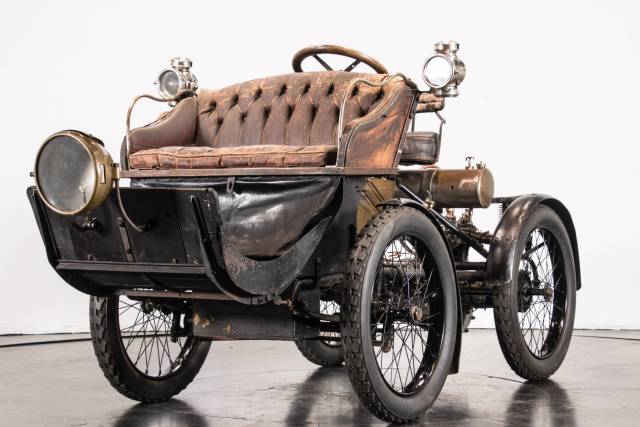
1903 | De Dion-Bouton 6HP
Create search alert
Let yourself be notified as soon as a listing is published that matches your search filters.
Create listing
Do you have a De Dion-Bouton 6 HP that you want to sell? Then create a listing now.
Create listingDe Dion-Bouton 6 HP Classic Cars: Prices & Market Values
History of the De Dion-Bouton 6 HP
Introduced in the early 1900s, the De Dion-Bouton 6 HP played a significant part in the rapid development of motor vehicles in Europe. The company, founded by Count Albert de Dion, Georges Bouton, and Charles Trépardoux, established itself as a leader in both engine and vehicle innovation at a time when the automobile industry was still in its infancy. The 6 HP stands out as one of the earliest successful production models that helped usher in more reliable and user-friendly automobiles, moving away from the limitations of steam and electric drivetrains toward the use of robust petrol engines.
Model Range and Development
The 6 HP was developed as an evolution of the company's earlier three-wheeled designs, which were among the earliest commercially available automobiles. By transitioning to a four-wheeled layout, De Dion-Bouton responded to demands for better stability and utility. The 6 HP model series featured several body styles, from simple open runabouts to more elaborate configurations, allowing buyers to tailor the car to individual preferences – a relatively novel concept at the time. Its success paved the way for later, more powerful De Dion-Bouton models, establishing the company as a benchmark in the emerging French automotive industry.
Highlights and Special Features of the 6 HP
The De Dion-Bouton 6 HP set itself apart through its compact yet reliable single-cylinder engine, advanced for its day with its high-tension ignition and lightweight design. The vehicle's rear axle, using the famous De Dion tube, improved stability and handling at a time when most competitors still struggled with primitive running gear. The cable-operated brakes and innovative transmission solution were further marks of ingenuity, offering a driving experience far ahead of many contemporary vehicles.
Technical Specifications of the De Dion-Bouton 6 HP
Special Editions and Collectible Models
Due to the limited production numbers and the company’s focus on innovation, each surviving De Dion-Bouton 6 HP can be considered unique, with many custom coachwork options offered by third-party builders. There is no indication of formally recognised special editions, but vehicles with documented provenance, competition history, or preserved original coachwork are regarded as special within collector circles.
Engine, Performance, Transmission and Handling
Equipped with a single-cylinder engine, the De Dion-Bouton 6 HP was capable of moderate top speeds by contemporary standards, generally reaching up to 45 km/h depending on body style and tuning. The innovative rear axle design, known as the De Dion tube, provided unprecedented stability on rough roads, while the vehicle's light weight ensured lively acceleration from a standstill. Transmission was typically via a simple gearbox and chain drive, allowing for straightforward but effective speed changes. While not designed for high-speed travel, the 6 HP was remarkably usable in its era, making it popular for both town and country motoring. Among De Dion-Bouton 6 HP models, variants with well-documented original coachwork and those retaining period-correct mechanicals are most highly regarded by collectors for historic events and rallies.
Interior, Comfort, Exterior and Design
The De Dion-Bouton 6 HP was available with a range of bodies, from simple open runabouts and vis-à-vis arrangements to more sophisticated carriage-style vehicles. Materials included varnished wood, polished brass fittings, and leather upholstery, reflecting the luxury aspirations of early motorists. The exposed steering, minimal dashboard instruments, and pronounced external controls speak to the era’s focus on function. Coachbuilders offered bespoke options for customers seeking individual touches, such as personalised colours and luxury details. Noteworthy design elements include elegant wheel spokes, forward-placed lamps, and the distinctive shape of the De Dion rear axle.
Other Distinctive Features
A unique factor of any De Dion-Bouton 6 HP today is the close connection to the pioneering years of motoring. They are frequently seen in historic events such as the London to Brighton Veteran Car Run, providing direct access to the atmosphere and sensation of early road travel. Most examples that exist today have detailed histories, often meticulously preserved or restored.
Summary
The De Dion-Bouton 6 HP represents one of the most significant early automotive designs, pairing technical ingenuity with usability. Its rarity in today’s market, combined with its historic significance, makes it a touchstone for anyone passionate about the dawn of motoring history. For collectors focused on authenticity, innovative engineering, and the charm of brass-era vehicles, the 6 HP holds enduring appeal.