Crossley Regis Classic Cars for Sale
The Crossley Regis, produced from 1935 to 1937 in Manchester, represents one of the last chapters in Crossley's rich automotive legacy. Known for its Coventry Climax engines and C F Beauvais-designed bodies, the Regis stands out with rare surviving examples and remarkable period performance.
Suchergebnisse
Zur Zeit sind keine passenden Inserate zu Ihrer Suche veröffentlicht.
Create search alert
Let yourself be notified as soon as a listing is published that matches your search filters.
Create listing
Do you have a Crossley Regis that you want to sell? Then create a listing now.
Create listingCrossley Regis listing references from Classic Trader
Below you will find listings related to your search that are no longer available on Classic Trader. Use this information to gain insight into availability, value trends, and current pricing for a "Crossley Regis" to make a more informed purchasing decision.
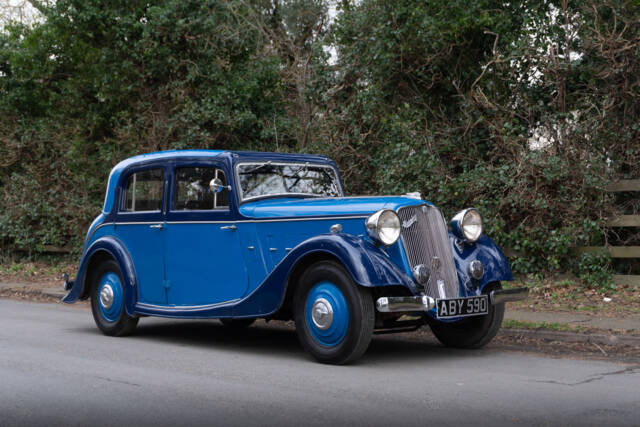
1934 | Crossley Regis 12/6
1934 Crossley Regis six
Create search alert
Let yourself be notified as soon as a listing is published that matches your search filters.
Create listing
Do you have a Crossley Regis that you want to sell? Then create a listing now.
Create listingCrossley Regis Classic Cars: Prices & Market Values
History of the Crossley Regis
The Crossley Regis was introduced in 1934, at a time when Crossley Motors in Manchester was nearing the end of passenger car production. Conceived at the initiative of Scottish Crossley dealer Gordon C McAndrew, who sought a modernised 10HP model, the Regis built on a modified 10HP chassis. The distinctive bodies were penned by C F Beauvais of New Avon Coachbuilders, later adapted by Crossley for the Regis Saloon. Public debut for both the Saloon and Sports Saloon variants took place at the 1934 London Motor Show, highlighting Crossley's push for modern motoring. Roughly 1,050 Regis units were manufactured between 1935 and 1937, making it one of the brand’s rarest series today.
Model History of the Crossley Regis
The Crossley Regis succeeded the earlier 10HP model, updating it with contemporary styling and engineering refinements in collaboration with New Avon. Both 4-cylinder and 6-cylinder versions were released simultaneously, with only slight exterior differences—most notably in the grille design. Official production of the Regis ended in 1937, with no direct successor as Crossley shifted focus away from passenger cars. Limited-run versions equipped with higher output engines were constructed exclusively for family and friends, further adding to the series’ exclusivity.
Highlights of the Crossley Regis
Key features of the Crossley Regis include the innovative use of Coventry Climax engines, each rebranded with Crossley badging. The Sports Saloon, showcasing the original Beauvais design, proved the most sought-after version. Few standard Saloons were built, underlining the rarity of each body style. Only 24 vehicles are known to remain today, a testament to the car's exclusivity and survival rate. In vintage motoring circles, the Regis consistently garners attention for its engineering prowess and period performance. A wealth of technical documents, period tests, and original manuals are still available, facilitating accurate restoration and maintenance.
Technical Data
Special Editions and Collectible Models
An extremely limited number of Regis models were assembled with a 1,650 cc twin-carburettor engine—these were not offered on the open market but provided exclusively to Crossley family members and close associates. These rare variants are especially valued for their enhanced performance and historical provenance.
Engine and Performance, Transmission and Handling
The Crossley Regis offered surprising agility for its time, thanks chiefly to the lightweight design and the flexibility afforded by the Coventry Climax engines. The Wilson pre-selector transmission delivered notably smooth gear shifts, setting it apart from contemporaries still reliant on conventional manual gearboxes. On the road, the Regis demonstrated assured handling given its period chassis, with reports of the model outperforming similar vehicles of its generation, especially in maintaining higher cruising speeds. Among the two main variants, the Sports Saloon remains particularly interesting to enthusiasts due to its C F Beauvais coachwork and higher production numbers compared to the standard Saloon. Both variants are powered by engines well-regarded for reliability and performance within pre-war British classics.
Interior, Comfort, Exterior and Design
C F Beauvais of New Avon Coachbuilders was responsible for the original aesthetic, resulting in a period-accurate design that combined elegance with individuality. Noteworthy is the differentiation in grilles: a crosshatch pattern for 4-cylinder versions and vertical slats for 6-cylinder models. Interiors typically reflected British standards of the era with high-quality materials, practical yet comfortable layouts, and period instruments. Specific coachbuilt elements and period paint options further added to the individuality of each vehicle. Original equipment included features like the Wilson pre-selector gearbox, which was considered state-of-the-art for the time.
Other Noteworthy Features
Surviving Regis examples are accompanied by a rich selection of technical literature and period manuals, making them especially suitable for detailed restoration or period-correct maintenance. The model’s public debut at major classic car events underscores its standing in historic motoring circles.
Summary
With only 24 known examples remaining worldwide, the Crossley Regis stands out as a rare piece of British automotive history. Its lineage, rooted in collaboration with prominent designers and engineers, as well as its advanced engineering for the era, ensure its continued relevance among classic car connoisseurs.