Crosley Super Sport classic cars for sale
The Crosley Super Sport stands out as a rare open roadster from the early 1950s, combining racecar flair with practical additions like doors and a minimalist roof. With a high-revving four-cylinder and compact, lightweight design, it remains a sought-after choice for enthusiasts seeking American engineering ingenuity in a pint-sized package.
Suchergebnisse
Zur Zeit sind keine passenden Inserate zu Ihrer Suche veröffentlicht.
Create search alert
Let yourself be notified as soon as a listing is published that matches your search filters.
Create listing
Do you have a Crosley Super Sport that you want to sell? Then create a listing now.
Create listingCrosley Super Sport listing references from Classic Trader
Below you will find listings related to your search that are no longer available on Classic Trader. Use this information to gain insight into availability, value trends, and current pricing for a "Crosley Super Sport" to make a more informed purchasing decision.
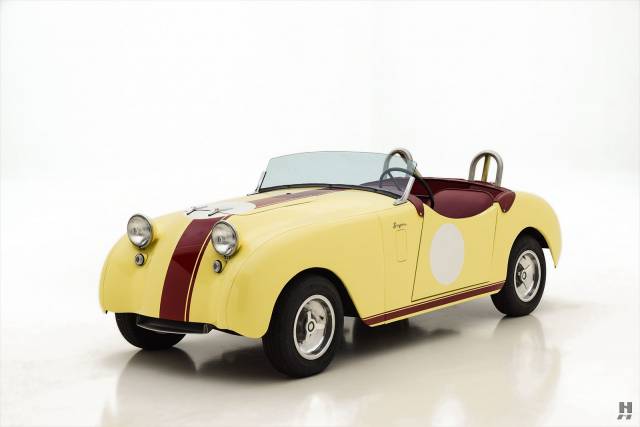
1951 | Crosley Super Sport
Crosley Super Sport
Create search alert
Let yourself be notified as soon as a listing is published that matches your search filters.
Create listing
Do you have a Crosley Super Sport that you want to sell? Then create a listing now.
Create listingCrosley Super Sport Classic Cars: Prices & Market Values
History of the Crosley Super Sport
Powel Crosley Jr., known as an innovative thinker, established Crosley and pursued the concept of compact, efficient cars as early as the 1930s. Crosley automobiles hit the market mid-1930s, making their public debut at the 1939 New York World's Fair. Early models featured an unconventional two-cylinder Waukesha engine, adapted from agricultural machinery. After WWII, Crosley swiftly restarted car production and introduced more advanced models, ahead of many competitors.
A significant step came with the adoption of the 717cc OHC four-cylinder 'CoBra' engine, though this was soon replaced by the more reliable 'CIBA' cast iron unit, recognised as one of the most advanced American engines of its day. Its robustness led to wider use in Italian 750cc racing specials. Crosley's automotive chapter ended in 1951, but not before influencing generations of micro- and sports car design.
Model History
The Super Sport was a direct evolution of Crosley's successful Hotshot roadster, initially introduced in 1949. While the Hotshot earned fame through motorsport achievements—including a notable Index of Performance win at Sebring in 1951—the Super Sport made the design more practical for everyday use by adding doors and a simple canvas top. Both cars embodied Crosley’s philosophy of lightweight, agile construction and minimalism. Production for both ceased in 1951, marking the end of Crosley passenger car manufacturing.
Highlights of the Crosley Super Sport
Distinctively small and nimble, the Super Sport added doors and a top to the bare-bones Hotshot, making it a practical sports car for its era. Interior elements were unembellished: patterned rubber mats instead of carpets, steel dashboards featuring Stewart Warner instruments, and colour-matched seats aligned with the car’s racing stripes. Lightweight construction extended to the body design, with narrow proportions and unique details like Monza-style tank caps on competition versions.
For motorsport, options included short racing screens, roll hoops, and special lightweight wheels such as Halibrands. The advanced CIBA four-cylinder was frequently paired with Weber carburettors and custom manifolds for performance applications, distinguishing the Super Sport among American small cars of its time.
Technical data
Special Editions and Collectible Models
Crosley Super Sport variants configured for racing—featuring options such as Halibrand wheels, racing screens, or shortened windscreens—are especially prized among collectors. Factory-modified versions or those documented with period competition history occupy a unique niche. Unique paint schemes with racing stripes and numbers, as well as period-modified engines with special carburettors or manifolds, further set certain vehicles apart.
Weak Spots and Common Issues
Though no manufacturer-specific technical issues are reported here, the advanced CIBA engine, while durable, benefits from careful maintenance and correct parts. Cars used in competition may show wear in areas like the suspension, steering, and drivetrain. Sourcing original interior features—rubber floor mats, Stewart Warner instruments, classic steering wheels—can be challenging due to the model’s rarity. Attention to rot in the bodywork and floor areas is recommended, as well as checks for cracks in alloy wheels and old racing modifications.
Engine and Performance, Transmission and Handling
The Crosley Super Sport’s lightweight chassis, short wheelbase, and high-revving CIBA engine provided surprisingly lively handling for a microcar, particularly by early 1950s standards. Single Weber 40 DCOE carburettors and tuned exhaust manifolds were often added for motorsport use. The four-speed manual was robust and allowed drivers to extract the best from the rev-happy four-cylinder.
Compared to its close sibling, the Hotshot, the Super Sport traded ultimate weight savings for practicality, but retained much of the same mechanical agility. Modern drivers will find the steering direct but unassisted, while the spartan interior places the driver close to the action. Period options such as lightweight Halibrand wheels and trimmed windscreens further enhanced the car’s motorsport credentials. - Crosley Super Sport (CIBA engine, 1950–1951): Recognised for its advanced four-cylinder engine, agility, and racing pedigree.
Interior, Comfort, Exterior and Design
The design of the Crosley Super Sport is unmistakable: compact proportions, distinctively narrow stance, and standout livery featuring racing stripes and numbers. The simple steel dash is equipped with prominent Stewart Warner gauges. Authentic interiors forgo carpet in favour of durable rubber mats. Original seats are often accented to match the car’s exterior stripes.
Exterior highlights include the Monza-style fuel cap on race-prepped versions, minimalist bumpers or none at all, and 12-inch wheels. Factory equipment was minimal, but owners frequently added special accessories such as roll bars or bespoke carburettors for track use. Any surviving factory accessories—unique trim pieces or period-correct racing add-ons—significantly raise the vehicle’s appeal among niche enthusiasts.
Other features
Some Super Sports were converted to pure racing use, shedding bumpers and adding lightweight hardware. Vehicles with confirmed period competition history, especially those displaying original details like alloy wheels and original factory paint, are rare finds. The CIBA engine’s reputation led to its adoption by other manufacturers—a testament to its engineering significance.
Summary
As a rare example of postwar American micro-sports cars, the Crosley Super Sport stands apart through engineering innovation, agility, and distinctive simplicity. Its advanced CIBA engine, practical yet race-inspired features, and unmistakable compact form attract dedicated fans of small-displacement sports cars. With limited production numbers and strong links to motorsport of its era, this is a piece of American motoring history seldom encountered on today’s roads.