Cartercar 7 classic cars for sale
The Cartercar 7 stands out as a rare example from the early days of American automotive history. As Cartercar's most recognised series, it uniquely showcases friction drive technology, setting it apart among pre-war automobiles. Discover more about the engineering and story behind the Cartercar 7.
Suchergebnisse
Zur Zeit sind keine passenden Inserate zu Ihrer Suche veröffentlicht.
Create search alert
Let yourself be notified as soon as a listing is published that matches your search filters.
Create listing
Do you have a Cartercar 7 that you want to sell? Then create a listing now.
Create listingCartercar 7 listing references from Classic Trader
Below you will find listings related to your search that are no longer available on Classic Trader. Use this information to gain insight into availability, value trends, and current pricing for a "Cartercar 7" to make a more informed purchasing decision.
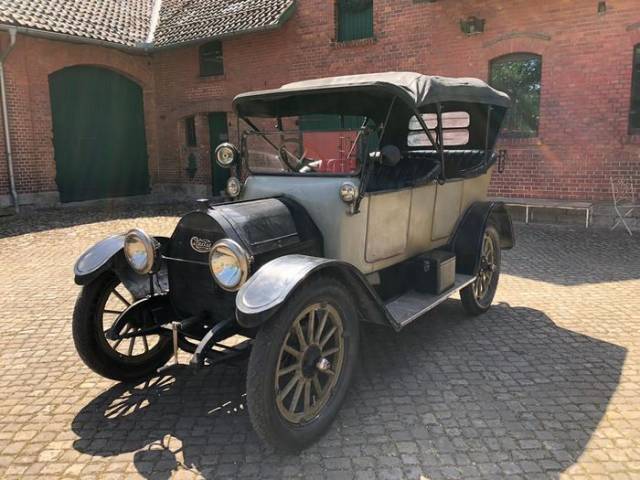
1913 | Cartercar 7 T
Create search alert
Let yourself be notified as soon as a listing is published that matches your search filters.
Create listing
Do you have a Cartercar 7 that you want to sell? Then create a listing now.
Create listingCartercar 7 Classic Cars: Prices & Market Values
History of the Cartercar 7
The Cartercar 7 marked a significant chapter for the Cartercar Company during the early 20th century, a period defined by inventive drive systems and experimentation. Founded in Jackson, Michigan before moving operations to Detroit, Cartercar quickly gained reputation for pioneering friction drive transmissions. The 7 series, produced before the eventual acquisition by General Motors in 1909, exemplifies the company's engineering philosophy, prioritising simplicity, durability, and accessibility over conventional gear-based systems. This technical approach influenced both enthusiasts and competitors, with the 7 becoming a symbol of innovative yet practical motoring from the pre-war era.
Model History
The model 7 is the standard-bearer of Cartercar's legacy, often referenced in period documentation as the series that defined Cartercar's brand. There are no direct predecessors or successors, as Cartercar's early exit from the automotive scene after its acquisition by GM marked the end of the company’s independent production. The Cartercar 7 therefore represents both the culmination and the conclusion of the Cartercar story.
Highlights of the Cartercar 7
A key feature that sets the Cartercar 7 apart is its friction drive transmission system, which allowed for a theoretically infinite number of gear ratios. This technology avoided the wear and complexity associated with early gearboxes and was heavily marketed as a solution for drivers seeking smooth power delivery. The system also permitted easier maintenance and adjustment. As Cartercar only produced a handful of variants, the 7 series can rightfully claim a unique position among brass-era vehicles, offering mechanical solutions not seen in its contemporaries.
Technical Data
Special Editions and Collectible Models
No factory-backed special editions of the Cartercar 7 are documented. Given the narrow production range and the focus on single-engineered solutions, each Cartercar 7 is already a rarity and collectible by nature.
Weak Spots and Common Issues
Without documented weak spots specific to the Cartercar 7, maintenance challenges typically revolve around its unique friction drive: sourcing replacement parts or materials for the drive disc, and ensuring correct adjustment, is critical for continued operation. Engine components share the general wear patterns of early 20th-century four-cylinder units, including potential issues with lubrication and fuel delivery. Consequently, ongoing preservation is essential for reliability.
Engine and Performance, Transmission and Handling
The Cartercar 7's friction drive enables smooth and nearly seamless acceleration, as drivers can select ratios without the pauses or jolts of multi-speed gearboxes. Its four-cylinder engine provides period-appropriate propulsion, and the lightweight chassis aids in manoeuvrability for such an early design. Handling benefits from the straightforward layout, but road holding follows the expectations for pre-war vehicles—limited by narrow tyres and simple suspension. The focus remains on mechanical transparency and ease of repair in comparison with gear-driven contemporaries. The Cartercar 7 is the sole focus for this make and series, reflecting both its exclusivity and singular representation of Cartercar's design philosophy.
Interior, Comfort, Exterior and Design
The Cartercar 7’s coachwork typically features open touring or runabout layouts, with exposed passenger seating and minimal weather protection, reflecting common practices of its era. Interiors make extensive use of early-20th-century hardwoods and straightforward upholstery, prioritising accessibility and ease of repair. Instrumentation is sparse, focusing only on essential controls. Notable design features include the pronounced bonnet line and prominent placement of the friction drive mechanism under the central floorboard.
Other Relevant Features
Due to the rarity of the Cartercar 7, spare parts availability relies on specialist craftspeople and vintage auto clubs. Each survivor is often the product of significant restoration efforts, reflecting both technical and historical expertise in pre-war American motoring.
Summary
The Cartercar 7 is a distinguished example of American engineering from the dawn of motoring. Characterised by its friction drive system, the 7 remains a mechanical landmark for enthusiasts and collectors focused on technology innovation and early automotive history. Due to its singular presence in the Cartercar supply and demand figures, it holds a special position for those seeking a brass-era vehicle that truly stands apart from other offerings.