BRM P261 classic cars for sale
The BRM P261 stands among the most accomplished British single-seaters of the 1960s, having achieved notable success on the Grand Prix and Tasman circuits. With its continuous development and impressive winning record, it represents a highlight in British motorsport engineering. Discover the BRM P261’s engineering and racing pedigree.
Suchergebnisse
Zur Zeit sind keine passenden Inserate zu Ihrer Suche veröffentlicht.
Create search alert
Let yourself be notified as soon as a listing is published that matches your search filters.
Create listing
Do you have a BRM P261 that you want to sell? Then create a listing now.
Create listingBRM P261 listing references from Classic Trader
Below you will find listings related to your search that are no longer available on Classic Trader. Use this information to gain insight into availability, value trends, and current pricing for a "BRM P261" to make a more informed purchasing decision.
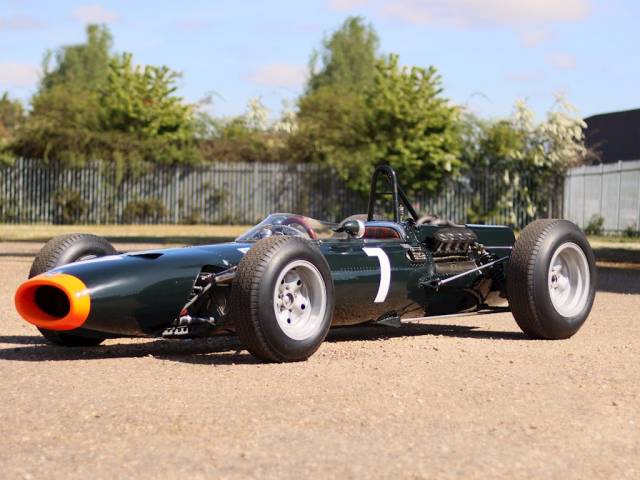
1964 | BRM P261
Create search alert
Let yourself be notified as soon as a listing is published that matches your search filters.
Create listing
Do you have a BRM P261 that you want to sell? Then create a listing now.
Create listingBRM P261 Classic Cars: Prices & Market Values
History of the BRM P261
Developed by British Racing Motors in Lincolnshire, the BRM P261 debuted for the 1964 Formula One season. Evolving from the short-lived P61, the P261 became BRM's main contender for several years. Driven by Graham Hill and Jackie Stewart, the P261 was a fixture at the front of the pack. Between its debut and retirement in 1968, it won six Formula One races, frequently battling for championship honours. The P261 was also instrumental in BRM’s international efforts, collecting victories in the highly competitive Tasman Series, demonstrating the adaptability and quality of British racing engineering in that era.
Model History
The P261 was a significant development over the earlier BRM P61. Tony Rudd and his design team shaped a more refined and competitive package, optimising aerodynamics, suspension, and reliability. The car remained active and refined through 1968, long after its initial debut. Its successor in the BRM family—the P83 and following models—adopted more radical design philosophies, leaving behind the evolutionary path set by the P261. Predecessors to the P261 were less successful in competition, making the P261 a turning point for BRM’s fortunes.
Highlights of the BRM P261
The BRM P261 is most notable for its six Formula One World Championship race wins and back-to-back second-place finishes in both the Drivers' and Constructors' standings in 1964 and 1965. This chassis also dominated the 1966 Tasman Series, with Stewart, Hill, and Attwood securing a total of seven victories out of eight races, underlining the car’s formidable reputation. Its exceptionally long competitive lifespan, with entries up until 1968, testifies to the strength of its engineering and the adaptability of its design.
Technical Data
Special Editions and Collectible Models
The P261 series saw several works-supported Tasman variants adapted for the international off-season series. These cars featured engine modifications and subtle chassis changes to suit local fuel and circuit requirements, making Tasman P261s particularly distinctive in BRM lore. Any surviving Tasman specification examples are especially valued for their connection with drivers such as Hill and Stewart.
Weak Spots and Common Issues
No model-specific weak spots or recurring issues have been documented in the provided sources. For vehicles of this age and complexity, buyers should pay close attention to the originality and integrity of chassis and driveline components, as well as the maintenance history of the V8 engine and gearbox. A technical inspection by a motorsport specialist is always recommended prior to purchase.
Engine and Performance, Transmission and Handling
The P261’s performance derived from its high-revving V8 engine, precise manual transmission, and sophisticated double-wishbone suspension. Its long-wheelbase layout provided exceptional stability and responsiveness, which allowed it to compete at the front of Grand Prix grids through much of its service life. During its active years, the P261 was noted for combining competitive lap times with durability across a wide range of circuits. BRM P261 models campaigned by Graham Hill and Jackie Stewart are frequently referenced, due to their major race wins and contributions to drivers' and constructors' points tallies. The Tasman Series P261s, successful in the hands of Attwood, Stewart, and Hill, constitute a distinct and technically interesting sub-group.
Interior, Comfort, Exterior and Design
The P261 features a streamlined monoposto cockpit, with minimal driver comfort in keeping with period racing design. Its aerodynamic bodywork, elegant suspension layout, and functional cockpit underline a single-minded focus on performance. Signature BRM green paint, simple roundels, and the meticulously engineered V8 engine visible in the rear compartment are distinguishing external and mechanical identifiers. No conventional accessories or luxury features—every element serves the driving task.
Other Features
The car’s competitive history is amplified by its use in both the World Championship and Tasman Series, making it one of the few chassis to achieve international success across hemispheres. Many P261s remain in existence due to the robust build and ongoing interest from historic racing participants and collectors in original specification examples.
Summary
The BRM P261 stands as the definitive BRM Grand Prix machine, with a significant role in British and international motorsport. Its technical sophistication, multiple Grand Prix and Tasman Series victories, and associations with drivers of the calibre of Hill and Stewart ensure its lasting relevance among both racing historians and collectors seeking the rarest and most noteworthy single-seaters of the 1960s.