Arrows A11 classic cars for sale
The Arrows A11 ranks as one of the rare sightings in the classic motorsport scene. Developed for Formula 1 in the late 1980s and early 1990s, the A11 encapsulates an era of technical transition, with its Judd V8 engine and lightweight chassis representing Arrows’ response to big regulatory changes in F1. Those searching for a piece of racing history will find the A11’s presence compelling for any motorsport collection.
Search results
Currently, there are no matching listings for your search.
Create search alert
Let yourself be notified as soon as a listing is published that matches your search filters.
Create listing
Do you have a Arrows A11 that you want to sell? Then create a listing now.
Create listingArrows A11 listing references from Classic Trader
Below you will find listings related to your search that are no longer available on Classic Trader. Use this information to gain insight into availability, value trends, and current pricing for a "Arrows A11" to make a more informed purchasing decision.
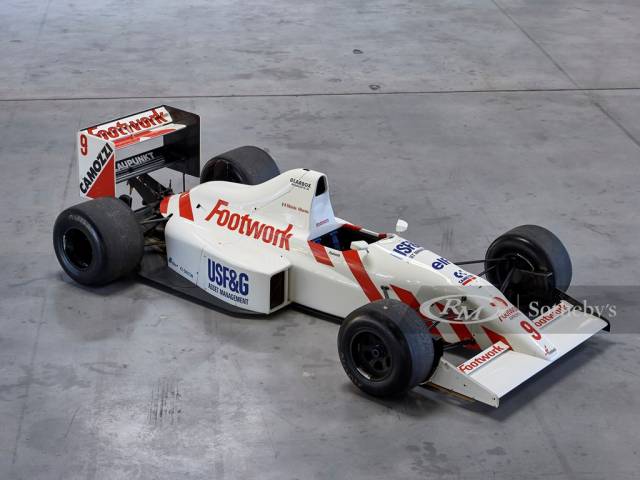
1990 | Arrows A11B
1990 Arrows A11B Formula 1
Create search alert
Let yourself be notified as soon as a listing is published that matches your search filters.
Create listing
Do you have a Arrows A11 that you want to sell? Then create a listing now.
Create listingArrows A11 Classic Cars: Prices & Market Values
History of the Arrows A11
The Arrows A11 debuted in the 1989 Formula 1 season, designed and built by the Arrows Grand Prix International team. This model was a direct product of the major rule changes that shifted F1 from turbocharged to naturally aspirated engines in 1989. The A11 carried a Judd CV V8 engine and was fielded during the 1989 and 1990 seasons, with a final appearance at the start of 1991. Its development reflected Arrows’ engineering ambition to compete effectively against larger, better-funded teams despite limited resources. While its success on the track was modest, the A11 is significant for marking an era of adaptation during an intensely competitive period in F1.
Model history of the Arrows A11
The A11 followed the Arrows A10, which was the team’s car just before the major rules overhaul. The adoption of the Judd V8 in the A11 was a decisive step into the post-turbo F1 era. It paved the way for later models like the Arrows A12, each iteration featuring revised aerodynamics and chassis to keep pace with evolving technical regulations. That brief lineage reflects the rapid pace of innovation common in Formula 1, where each model is only briefly at the cutting edge before being surpassed.
Highlights of the Arrows A11
A distinctive feature of the A11 is its Judd CV naturally aspirated V8 engine, a marked change from the turbocharged setups that had dominated F1. Its lightweight and purposeful construction focus on mechanical grip and reliability, hallmarks shaped by the constraints and opportunities of the period’s regulations. The A11 also carries value for its status as a genuine F1 chassis from a small, gritty independent team.
Technical data for the Arrows A11
Special Editions and Collectible Models of the Arrows A11
There are no known factory special editions of the Arrows A11 as it was built solely for competition use, with each car built to order for race specification. However, any surviving chassis with Grand Prix race history—particularly those driven by notable pilots or with significant result history—are especially noteworthy to collectors due to their authentic F1 provenance.
Weak spots and common issues in the Arrows A11
As a genuine Formula 1 car, the A11 requires specialist maintenance and restoration expertise. Potential challenges include sourcing original Judd engine components, verifying chassis provenance, and managing age-related wear in composite materials and bespoke suspension parts. For prospective owners, thorough technical inspection and documented race history are essential for both authenticity and safe operation.
Engine, performance, transmission and handling
Powered by the Judd CV V8, the A11 was constructed for outright speed and agility on circuits. Its naturally aspirated engine produced robust mid-range power and was less complex than turbo predecessors, offering more predictable throttle response. Manual transmission and advanced-for-its-time carbon-composite chassis contributed to precise, communicative handling—though set-up expertise is critical to extract its full capabilities on track. Notable cars from the A11 series are those featuring preserved chassis with documented participation in the 1989 F1 season or early 1990 events, particularly those with known driver history or rare modifications for qualifying or specific circuits.
Design, interior and exterior details of the Arrows A11
The A11’s exterior features a purposeful, angular aerodynamic profile designed by the Arrows engineering team to meet late 1980s ground effect limitations. The cockpit is stripped and functional, following single-seater philosophy with minimal padding, essential analog instrumentation, and bespoke racing controls. Livery was typically finished in team sponsor schemes, with composite panels contributing to its low weight and high rigidity. No special comfort or accessories exist, as all design was focused on racing function and safety.
Other relevant information
Potential A11 buyers should be aware that car registration for road use is not possible; the car is for circuit use, show, or historic racing events only. Ownership involves unique logistics compared to sports or touring classics, including race transporter access and dedicated spares supply. Preservation of documentation, race history, and technical originality greatly affects collector value.
Summary
The Arrows A11 offers a raw glimpse into Formula 1’s late 1980s technical and regulatory transformation. Its Judd V8 engine, composite chassis, and original race-use build make it a rare proposition for classic motorsport enthusiasts. While maintenance and operation are demanding, the A11’s heritage and authenticity are unquestionable, providing collectors and historic racers a true piece of F1 history.