Arrows A10 classic cars for sale
The Arrows A10 was developed for the Formula One seasons of 1987 and 1988, bearing the signature of Ross Brawn’s design work. With its participation in two consecutive F1 championships and engineering updates for the A10B version, this model series represents a notable chapter in privateer team innovation during the turbo era of Grand Prix racing.
Résultats de la recherche
À l'heure actuelle, il n'y a pas d'annonces correspondant à votre recherche.
Create search alert
Let yourself be notified as soon as a listing is published that matches your search filters.
Create listing
Do you have a Arrows A10 that you want to sell? Then create a listing now.
Create listingArrows A10 listing references from Classic Trader
Below you will find listings related to your search that are no longer available on Classic Trader. Use this information to gain insight into availability, value trends, and current pricing for a "Arrows A10" to make a more informed purchasing decision.
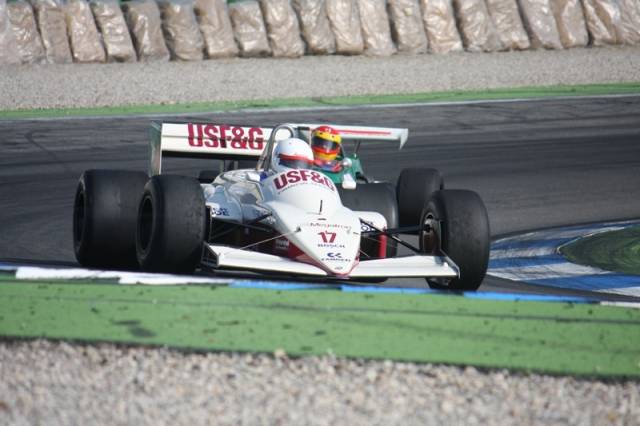
1988 | Arrows A10B
1988 Arrows F1 USF&G Arrows Megatron A10B
Create search alert
Let yourself be notified as soon as a listing is published that matches your search filters.
Create listing
Do you have a Arrows A10 that you want to sell? Then create a listing now.
Create listingArrows A10 Classic Cars: Prices & Market Values
Introduction and history of Arrows A10
The Arrows A10 entered the world of Formula One at a turning point in the sport, when both technology and competition were accelerating rapidly. Introduced in 1987, the A10 debuted as Arrows’ answer to the ferociously competitive turbocharged field of the late 1980s. Designed by the talented Ross Brawn, who would go on to become one of F1’s most influential technical minds, the A10 marked a significant engineering effort for the team. The following season, Arrows updated the car as the A10B, refining several mechanical and aerodynamic elements. Competing across two demanding seasons, the A10 showcased the ingenuity and resourcefulness of a privateer outfit facing established manufacturers.
Model history
The Arrows A10 succeeded the earlier Arrows A9 chassis and represented an evolution in aerodynamic design and mechanical reliability for the team. Its 1988–spec upgrade, the A10B, was distinguished by iterative enhancements rather than a complete overhaul, emphasising continuous development—a theme that defined Arrows’ approach throughout the era. The A10 would eventually be succeeded by the Arrows A11 in 1989, which was designed to adapt to ongoing regulatory and technological shifts in Formula One.
Highlights of Arrows A10
A defining feature of the A10 is its connection to Ross Brawn’s early career, evidenced in the car’s considered engineering. The chassis was developed for turbocharged competition and stood out for its robust construction amid the reliability challenges of the era. The A10B update included targeted aerodynamic and structural refinements, keeping the car competitive during its two-year campaign.
Technical data
Special Editions and Collectible Models
The 1988 evolution of the car, the Arrows A10B, stands as the primary special version, benefitting from specific upgrades in aerodynamics and chassis tuning over the original A10. Built for a competitive F1 season, this sub-variant is a marker of Arrows’ commitment to in-season development.
Engine and Performance, Transmission and Handling
The Arrows A10 was engineered for the demanding requirements of late-1980s Formula One, with a focus on turbocharged power delivery, competitive handling, and maximal reliability within the constraints faced by a privateer team. With continual mechanical and aerodynamic refinement, especially in the A10B, the performance envelope was expanded between the 1987 and 1988 seasons. The A10B, representing the end-of-line upgrade, is particularly noteworthy for collectors and enthusiasts interested in technical evolution across short production cycles.
Interior, Comfort, Exterior and design
As a thoroughbred Grand Prix machine, the A10’s design followed strict performance requirements, with a monocoque chassis and minimal driver accommodations, typical for contemporary F1 cars. The car’s exterior was defined by aerodynamic priorities, integrating subtle but significant changes in its 1988 update. Every visible and concealed element on the A10 is a product of its single-minded purpose: circuit performance.
Summary
The Arrows A10 encapsulates a specific phase in Formula One’s technical arms race, illustrating both the ambitions of the Arrows team and the early career of Ross Brawn. Its scarce availability on the classic market underlines its status as a purpose-built competition car, appealing to connoisseurs of motorsport engineering and F1 history.