- Automobil
- Armstrong-Siddeley
- Armstrong-Siddeley 20/25 (0 Angebote)
Armstrong-Siddeley 20/25 classic cars for sale
The Armstrong-Siddeley 20/25 represents a unique chapter in British automotive engineering, marked by robust mechanics, luxury-minded build quality and a distinctive period design. For enthusiasts interested in character-rich pre-war and immediate post-war motoring experience, this model stands out with its craftsmanship and sophisticated technical solutions.
Suchergebnisse
Zur Zeit sind keine passenden Inserate zu Ihrer Suche veröffentlicht.
Create search alert
Let yourself be notified as soon as a listing is published that matches your search filters.
Create listing
Do you have a Armstrong-Siddeley 20/25 that you want to sell? Then create a listing now.
Create listingArmstrong-Siddeley 20/25 listing references from Classic Trader
Below you will find listings related to your search that are no longer available on Classic Trader. Use this information to gain insight into availability, value trends, and current pricing for a "Armstrong-Siddeley 20/25" to make a more informed purchasing decision.
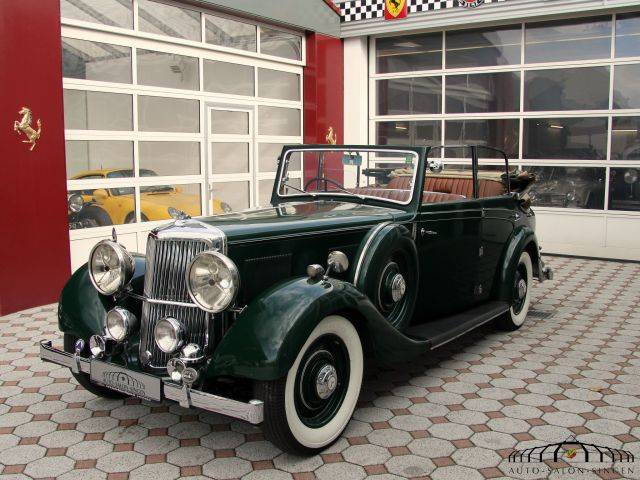
1936 | Armstrong-Siddeley 20/25 Tickford
-
Create search alert
Let yourself be notified as soon as a listing is published that matches your search filters.
Create listing
Do you have a Armstrong-Siddeley 20/25 that you want to sell? Then create a listing now.
Create listingArmstrong-Siddeley 20/25 Classic Cars: Prices & Market Values
Introduction and history of Armstrong-Siddeley 20/25
Introduced by Armstrong-Siddeley, a marque renowned for its engineering origins and distinctive blend of luxury and performance, the 20/25 targeted the upper-middle-class market in Britain during its production years. Following the First World War, Armstrong-Siddeley made a decisive move from aircraft engines to upmarket automobiles. The 20/25 emerged as part of the company's transition to six-cylinder luxury saloons and limousines, appealing to professionals and conservative buyers looking for reliability and understated style. The model’s chronology is embedded within a turbulent economic period, but the 20/25 managed to establish itself through consistent quality and emerging technical upgrades.
Model history
The Armstrong-Siddeley 20/25 was developed as an evolution of previous six-cylinder models, aiming to deliver smoother driving comfort and improved performance over earlier designs. It bridged the gap between the more compact 16HP and the larger 30HP saloons, filling a market niche for buyers who desired a substantial yet manageable luxury car. There were various body styles available, including formal limousines and practical saloons, catering to evolving customer preferences before the marque entered the post-war era and eventually introduced successor models with more modern styling and technology.
Highlights of Armstrong-Siddeley 20/25
Distinctive features include the robust six-cylinder engine, precision engineering for the driveline, and soundproofed passenger compartments—reflecting the brand’s background in aircraft manufacturing. Armstrong-Siddeley interiors were renowned for high-quality woodwork and refined leather, while the exterior bore classic English lines and a notable radiator grille design. The 20/25’s focus on smooth operation and reliable travel catered to gentlemen drivers and the chauffeured class alike.
Technical data
Special Editions and Collectible Models
At various points, coachbuilders produced unique bodies for the 20/25, including formal limousines, drophead coupés and four-door saloons. Vehicles with bespoke bodies or unusual configurations are considered especially collectible today, particularly those preserved with original fittings and period-correct restoration details.
Weak Spots and Common Issues
As with many classic vehicles from this era, the Armstrong-Siddeley 20/25 requires particular attention to engine cooling components, chassis lubrication points, and period-specific electrical systems. Rust in structural areas, wear in leaf springs, and perished rubber components are common challenges. Sourcing correct replacement parts can be difficult; maintaining originality in restoration efforts is a priority for dedicated collectors.
Engine and Performance, Transmission and Handling
The 20/25’s straight-six delivers adequate torque for stately motoring, prioritising smooth acceleration over outright speed. The manual gearbox, with its long travel and deliberate action, rewards patient and precise shifting. The leaf-sprung suspension and substantial chassis result in comfortable, composed road manners, especially on period-appropriate surfaces. Handling, while not nimble by modern standards, is reassuringly predictable.
Notable configurations include saloon variants with original coachwork and factory-fitted sunroofs, as well as limousine versions tailored for formal service. Engines from later production runs offered incremental improvements in reliability and driveability.
Interior, Comfort, Exterior and design
The Armstrong-Siddeley 20/25 showcases British craftsmanship through extensive use of wooden dashboards and rich leather upholstery. Exteriors feature upright classic lines, chrome detailing, and the marque’s signature sphinx mascot atop the radiator grille. Factory options could include folding tables for rear passengers, division partitions for chauffeur-driven versions, and period-appropriate audio equipment. Specialist coachbuilders occasionally delivered unique paint finishes or interior trim for discerning buyers.
Other relevant features
A distinct aspect of the 20/25 is its mechanical simplicity, making it approachable for hobbyist mechanics with period knowledge. The vehicle’s presence in select period films and historic motoring events adds cultural resonance, and it remains a favourite among British car club circles for rallies and shows.
Summary
The Armstrong-Siddeley 20/25 endures as an exemplar of interwar British engineering and discrete luxury. Its appeal lies in its association with a bygone era of craftsmanship, engineering rigour, and dignified motoring. For collectors and enthusiasts, the 20/25 offers unique opportunities in restoration, preservation, and enjoyment of classically British road travel.