A.J.S. Special Classic Cars for Sale
The A.J.S. Special stands out among pre-war British sports cars due to its rare production, bespoke coachwork and advanced engineering for its era. Produced from 1930 to 1932, these vehicles combined A.J.S.-supplied rolling chassis with distinctive open four-seater bodies, often shaped by renowned coachbuilders. Exceptional scarcity and a dedicated community continue to make the A.J.S. Special a notable collector’s piece today.
Search results
Currently, there are no matching listings for your search.
Create search alert
Let yourself be notified as soon as a listing is published that matches your search filters.
Create listing
Do you have a A.J.S. Special that you want to sell? Then create a listing now.
Create listingA.J.S. Special listing references from Classic Trader
Below you will find listings related to your search that are no longer available on Classic Trader. Use this information to gain insight into availability, value trends, and current pricing for a "A.J.S. Special" to make a more informed purchasing decision.
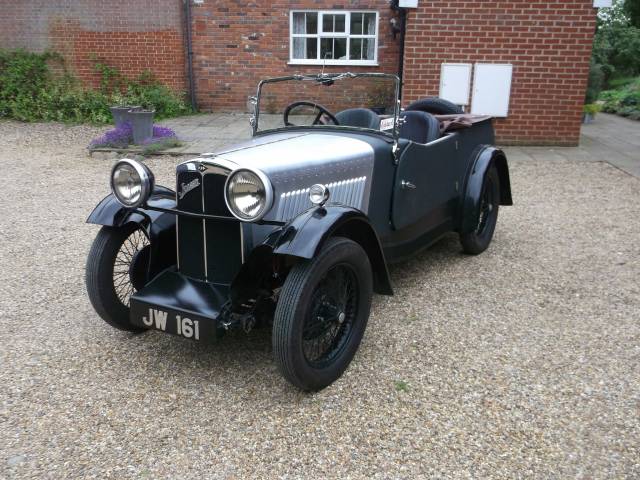
1932 | A.J.S. Jensen Special
The only one made of this model- your chance to own it.
Create search alert
Let yourself be notified as soon as a listing is published that matches your search filters.
Create listing
Do you have a A.J.S. Special that you want to sell? Then create a listing now.
Create listingA.J.S. Special Classic Cars: Prices & Market Values
History of the A.J.S. Special
The A.J.S. Special emerged in the early 1930s, a period marked by rapid technical and stylistic evolution in the British automotive sector. Manufactured between 1930 and 1932, A.J.S. produced around 1,000 units before financial difficulties led to administration. Their vehicles were widely recognised for participating at automotive exhibitions such as the 1932 London Motor Show. The brand worked with a network of trusted coachbuilders—including Jensen Brothers and others commissioned for unique, dealer-specific requests (e.g., Chamberlain, King & Jones, Birmingham)—that made each car unique in detail and silhouette. The marque’s brief yet intensive foray into car production left a distinctive imprint, and today, the remaining A.J.S. Specials are testaments to a creative and ambitious interwar manufacturer.
Model History
A.J.S. originally made a name for itself in the British motoring community with motorcycles before entering the automotive sector. The Special series stands as their primary foray into four-wheeled vehicles, without any direct predecessor in the brand’s history. Distinguishing itself through the customisation of chassis and coachwork by external specialists, especially the rare AJS-Jensen models, the Special became synonymous with personalisation and sports motoring of its time. After A.J.S. ceased automotive production due to insolvency in early 1932, coachbuilders like Jensen switched to alternative chassis, closing the brief but productive chapter on the A.J.S. Special.
Highlights and Unique Features
- Approximately 1,000 A.J.S. Special vehicles produced, making original examples exceptionally rare.
- Renowned for open four-seater sports car designs tailored by various coachbuilders
- Unique technical features such as overhead-valve engines, steering wheel levers for throttle and ignition timing adjustment, and rolling chassis for bespoke bodywork
- Frequently equipped with advanced user modifications, including period-style indicators and modernized lighting
- Modern club continues to support parts fabrication and knowledge sharing, with annual owner meetings.
Technical Data
Special Editions and Collectible Models
Among the A.J.S. Special series, the AJS-Jensen stands out thanks to its bespoke bodywork by the celebrated Jensen Brothers—crafted for specific customers or dealers. Custom contract vehicles built for Birmingham’s Chamberlain, King & Jones also increase the diversity within the Special range, often presenting rare or unique features absent from standard production.
Weak Spots and Common Issues
Spare parts availability is actively managed by the A.J.S. owners’ club, with components like half shafts and clutch arms often produced as aftermarket reproductions. Common restoration efforts focus on wooden frame repairs, sourcing original or period-correct aluminium panels, and maintaining unique period features such as mechanical controls on the steering wheel. Modern upgrades, such as improved lighting, are typical due to the limited performance of the original electrical system. Owners should be aware of the rarity of genuine parts and the necessity of club affiliations for reliable maintenance.
Engine and Driving Characteristics, Transmission and Handling
The A.J.S. Special’s overhead-valve inline engine delivers a distinct pre-war driving experience, with manual ignition and throttle controls lending the driver full mechanical command. The open sports body configuration supports excellent visibility and agility for its era, while modern enhancements (like retrofitted direction indicators or updated lighting) ease use in contemporary traffic. Driving dynamics reflect the sporting intentions of its period—direct steering and a lightweight body contribute to an engaging motoring adventure. Highlighted examples include Jensen-bodied variants for their craftsmanship and rarity, and custom-order models for dealers like Chamberlain, King & Jones, which frequently featured bespoke appointments or structural variations.
Interior, Comfort, Exteriors and Design
Interiors of A.J.S. Specials reflect classic British sports car design: a timber-framed dashboard, mechanical levers for throttle and ignition, and period-correct materials. Many models feature sporting elements like a folding top and minimalist instrumentation. Exteriors boast tailored coachwork—primarily steel or aluminium panels over ash framing—finished in period-appropriate colours and water-repellent textiles. The use of Rexine imparts both historical authenticity and functional durability. Individuality was further enhanced by commissions for special exterior features or colour schemes, especially for high-profile dealer or customer orders. Accessories, such as the distinctive cruise control-enabled throttle lever and unique lighting architectures, were often integrated by owner demand or modernisation.
Other Features
The A.J.S. owners’ club plays a pivotal role in preservation, organisation of meetups and parts provisioning. The club’s annual events foster a growing community and technical knowledge, which is critical for maintaining these rare vehicles. Some examples today sport subtle updates for modern drivability, such as signal indicators, brighter lamps, or improved ignition.
Summary
The A.J.S. Special represents a unique and rare slice of British motoring history. Limited to approximately 1,000 units and often featuring custom coachwork, it exemplifies both the creativity and technical boldness of its era. Survival today depends on committed club support, ongoing part reproduction, and sensitive upgrades for practical use, making each example an exceptionally individual collector car.